
At the intersection of America’s founding principles of religious liberty and the divine call to neighborly love, there is a beautiful revelation: the same Creator who endowed us with “unalienable Rights” also wove into the fabric of creation an unchangeable moral order that calls us to love our neighbor.
The Founders’ revolutionary insight—that our rights flow from both rational observation of nature and divine revelation—mirrors the dual witness we see in the Parable of the Good Samaritan in the Bible. Just as we can observe through reason that all humans possess inherent dignity, we can also perceive through our God-given rational faculties the moral imperative to care for one another. The Samaritan didn’t need religious instruction to recognize the wounded man’s humanity—it was written in the laws of nature and conscience.
“We live in a world in which we need to share responsibility. It’s easy to say ‘It’s not my child, not my community, not my world, not my problem.’ Then there are those who see the need and respond. I consider those people my heroes.”
– Fred Rogers of Mister Rogers’ Neighborhood
This brings new depth to Fred Rogers’ ministry of neighborly love. His gentle invitation, “Won’t you be my neighbor?” wasn’t just a personal preference or social convention—it was an acknowledgment of a moral reality as fixed as gravity. When he saw each person as worthy of dignity and love, he recognized what Thomas Jefferson called “self-evident” truths about human nature and divine design.
The profound truth emerges: our calling to neighborly love isn’t merely a suggestion or cultural construct—it’s woven into the very fabric of creation by “nature’s God.” Just as we’re born into a physical world with unchanging natural laws, we’re born into a moral universe with fixed principles, including the duty to love our neighbor as ourselves.
This divine order illuminates why the pursuit of happiness through material acquisition ultimately falls flat. It attempts to violate the natural moral law that ties human flourishing to loving service. True happiness, as our Founders understood, comes from living in harmony with both natural and moral law. The Good Samaritan found fulfillment not in pursuing his own interests, but in aligning himself with the moral order by showing mercy.
When we understand that neighborly love isn’t just a nice idea but a reflection of unchangeable divine law, it transforms how we view our calling. We’re not just choosing to be kind. We’re participating in the divine order, fulfilling our created purpose. Like the Good Samaritan, we’re aligning ourselves with the moral fabric of the universe when we stop to help someone in need.
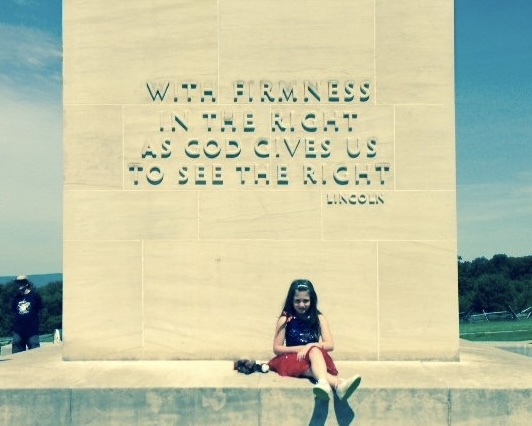
This convergence of America’s founding philosophy and biblical wisdom offers us a compelling vision: a society where religious liberty flourishes precisely because we recognize both rational and divine grounds for human dignity. When we embrace this truth, we’re freed to love our neighbors not out of mere sentiment or obligation, but as a joyful expression of living in harmony with the created order.
The invitation to grow neighborly love thus becomes more than a personal choice. It’s a call to align ourselves with the very structure of reality as designed by “nature’s God.” In doing so, we find what both America’s Founders and Fred Rogers understood: true liberty and authentic happiness flow from living under the divine moral order, which always points us toward selfless love of neighbor.
Will you join in this sacred dance of liberty and love? The same Creator who endowed us with unalienable rights calls us to express those rights through sacrificial service to our neighbors. In this holy conjunction of rights and responsibilities, we find our truest freedom and deepest joy.
 MindWolves