
The tale of Cyrus the Great’s ascendancy and his ties with the Jewish people is nothing short of a thrilling saga in the annals of ancient history. Let me unfold this dramatic narrative. Cyrus II, known as the Great, asserted his dominance by seizing the throne of Persia around 559 BCE, and his empire burgeoned through a series of daring military campaigns. The pivotal moment that shook the foundations of Israel’s captivity unfolded in 539 BCE, when Cyrus stormed into Babylon—a city that had cruelly imprisoned the Jewish people since Nebuchadnezzar’s devastating conquests in 586 BCE.
What truly made Cyrus stand out in relation to God’s people was his compassionate approach toward those he conquered. Unlike many ancient rulers who would often burden subjugated nations with harsh oppression, Cyrus embraced a more understanding stance with his “Cyrus Cylinder” policy. He not only permitted conquered peoples to preserve their cultural and religious practices but also offered them the opportunity to return to their homelands if they had been displaced, showing respect for their identities and traditions.
For the Jewish people specifically, Cyrus issued a decree (recorded in the Bible in Ezra 1:1-4) that:
- Allowed the Jewish exiles to return to Jerusalem
- Permitted them to rebuild their Temple
- Returned the sacred vessels that Nebuchadnezzar had taken from the First Temple
- Provided resources for the reconstruction
The Bible presents Cyrus in a uniquely positive light for a non-Jewish ruler. In Isaiah 44:28-45:1, he is even called God’s “shepherd” and “anointed one” (messiah), with the text suggesting that God specifically raised up Cyrus for the purpose of freeing His people and rebuilding Jerusalem. This was an extraordinary designation for a non-Jewish ruler.
This historical relationship between Cyrus and the Jewish people had long-lasting effects. His policies established a generally positive relationship between the Jewish people and the Persian Empire that would last for generations, and his support for rebuilding the Temple was crucial for the restoration of Jewish religious life in Jerusalem.
The idea of religious liberty in America echoes the Cyrus narrative, as both stand as bold defiance against the shackles of outdated religious governance, challenging the status quo and reshaping the very foundation of belief. Just as Cyrus implemented an unprecedented policy of religious tolerance in the ancient world – allowing conquered peoples to practice their faiths freely and even supporting their religious institutions – the American founding fathers established a revolutionary approach to religious freedom. Key parallels include:
- The departure from state control of religion:
- Cyrus broke from the ancient norm of imposing the conqueror’s gods on subjected peoples.
- The American founders rejected the European model of state-established churches.
- Support for multiple faiths:
- Cyrus’s policies allowed various religious groups to maintain their practices and sacred sites.
- The American system was designed to protect all religious expressions, not just particular denominations.
- Practical implementation:
- Cyrus provided material support for rebuilding religious institutions while not controlling their practices.
- American religious liberty combines institutional separation with active protection of religious exercise.
However, there are also important distinctions. While Cyrus operated as a monarch giving privileges to religious groups, the American system established religious freedom as a fundamental right. The American approach went further by explicitly prohibiting government establishment of religion while simultaneously protecting its free exercise. Religious liberty wasn’t merely a favor bestowed by a so-called benevolent ruler (like Cyrus) but was boldly enshrined as an inalienable right that the government is obligated to protect but ultimately cannot dictate. It is most clearly expressed in the Declaration of Independence’s famous passage: “We hold these truths to be self-evident, that all men are created equal, that they are endowed by their Creator with certain unalienable Rights, that among these are Life, Liberty and the pursuit of Happiness.” In other words, the cornerstone of religious liberty in America is the foundational concept that fundamental rights come from God, not from government or rulers – a radical departure from the traditional view that rights were granted by monarchs or states.
Some key elements in the American model are significant:
- The reference to “their Creator” rather than a specific deity or religious tradition reinforced the idea of universal religious liberty, not tied to any particular faith.
- The term “unalienable” rights means they cannot be taken away or given away – they are inherent in human nature because they come from God, not from government.
- By positioning “Liberty” as a God-given right, the Declaration established religious freedom as something governments must protect rather than grant.
The Declaration’s clear appeals to “Nature’s God,” “Divine Providence,” and “the Supreme Judge of the world” assert a strong framework. These terms were intentionally selected to embrace diverse religious perspectives while firmly establishing rights on divine, not human, authority.
This was fundamentally different from both:
- The Cyrus model, where religious liberty was granted as a privilege by a benevolent ruler
- The European model, where religious rights were typically defined and limited by the state
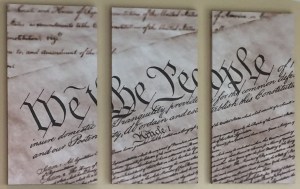
This American model was revolutionary, establishing the government as the protector of religious liberty instead of its source, while effectively sidestepping the establishment of any specific religious tradition as the dominant one. This pivotal shift culminated in the ratification of the First Amendment of the United States Constitution on December 15, 1791.
Congress shall make no law respecting an establishment of religion, or prohibiting the free exercise thereof; or abridging the freedom of speech, or of the press; or the right of the people peaceably to assemble, and to petition the Government for a redress of grievances.
Amendment I to the Constitution of the United States of America
The laws of nature and nature’s God serve as steadfast bedrocks, eternal and unwavering, and bestow upon future American citizens the remarkable gift of religious liberty. We must never forget the sacrifices made to secure this gift, for we cannot allow it to flicker and fade into oblivion.
 MindWolves
Bravo. Sent from my iPhone
LikeLiked by 1 person