
I recently took a DNA test. I figured it would be straightforward, maybe a little Italian, maybe something surprising.
My mother is 100% Syrian. My grandfather immigrated from Damascus. My father has a very Italian last name. And Ancestry.com tells me I’m 50% Levant, 19% English and Northwestern European, 16% Northern Italian, 13% Scottish, and 2% Norwegian. One hundred percent accounted for, zero percent fitting neatly into any box I’ve ever been handed on a government form.
So I had to ask myself, and I’m asking you now too, should I really be called an Arab-British-Italian-Scottish American? And if my only option on a survey is “non-Hispanic white,” who decided that? Who gets to put me there?
Here’s the more important question: Why are we doing this to each other at all?
By 2050, half of America’s population will be made up of current racial and ethnic minorities. Arab Americans, like me, apparently, are considered one of them. So, am I a minority or am I in the white majority? The more I thought about it, the more I realized the whole system of sorting human beings by race and ethnicity isn’t clarifying anything. It’s just dividing us, and somebody is profiting from that division.
I’m a parent. I’m a patriot. I’m a Christian. And I believe the path we’re on right now is one our children will pay for if we don’t course-correct. This is about what we leave them.
The Language Game We Keep Losing
In a recent essay titled “The Whiteness Double Standard,” Christopher F. Rufo observed something that cuts to the heart of our current national confusion. The same institutions that spent years telling Americans that “white culture” was inherently oppressive have suddenly turned around and accused anyone who acknowledges cultural identity of being a racist. As Rufo argues, the only way through this thicket of language games is to first clarify the concepts and define the terms so we can begin to separate what’s true from what’s being weaponized.
I’ll take that one step further: the only foundation solid enough to stand on when the language games are swirling is the Word of God. When we let political actors on any side define us by the color of our skin or the ancestry of our bloodline, we’ve already surrendered the real argument because the real argument was never supposed to be about that. It was always supposed to be about something far more durable.
What the Founders Actually Believed
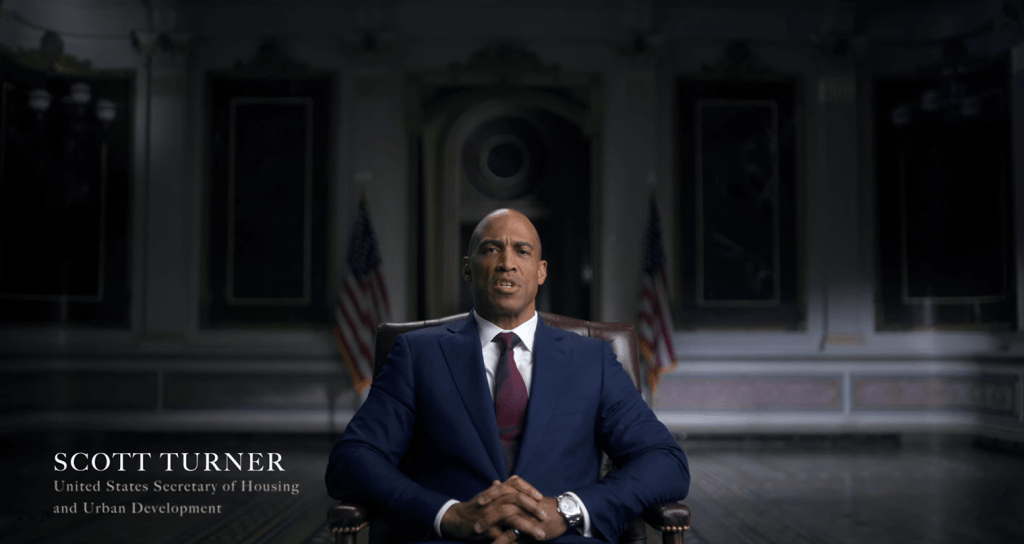
U.S. Secretary of Housing and Urban Development Scott Turner recently narrated a powerful video of what was set in motion 250 years ago when 56 men put their names to the Declaration of Independence. They declared to the world that all men are created equal, that they are endowed by their Creator with certain unalienable rights, that among them are life, liberty, and the pursuit of happiness.
Those are not merely political words. They are theological ones. The founders grounded human dignity not in government, not in culture, not in race, but in creation itself. In the conviction that you and I were made by a God who endows us with rights that no king, parliament, or political party can legitimately strip away. Inalienable rights, meaning they belong to us because of who made us, not because of what a government grants us.
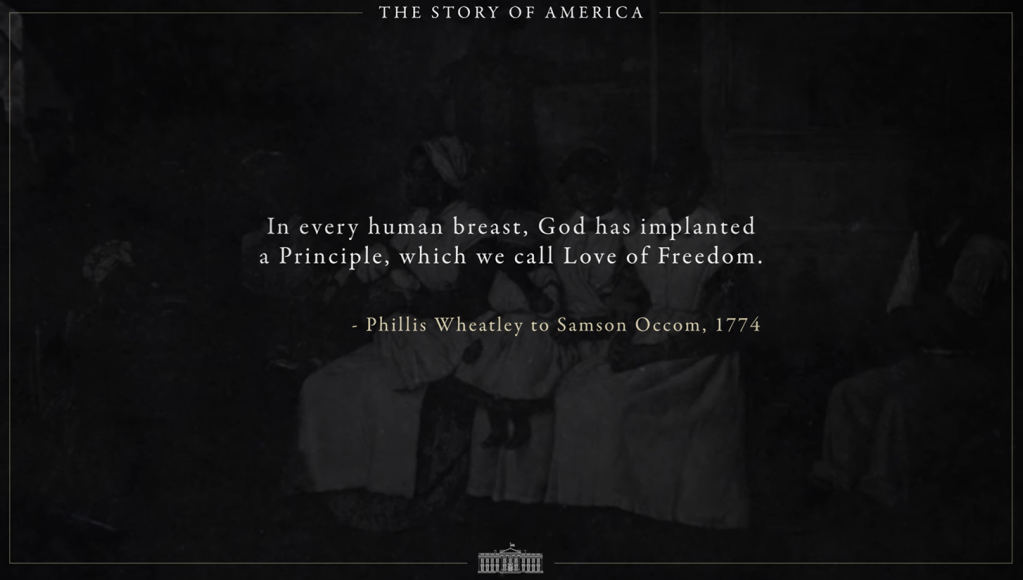
Yes, some of those founders failed catastrophically to live up to those words. Slavery was evil. No circumstance justifies treating human beings as property. But as Secretary Turner compellingly argued, the Declaration set in motion a chain of events that put slavery on a path to extinction. African Americans, enslaved and free, fought in the Revolutionary War, not waiting to be liberated by others, but seizing their own claim to liberty. Men like Prince Estabrook, James Armistead Lafayette, and Lemuel Haynes risked everything for a promise that was imperfectly applied but powerfully true. Women like Phyllis Wheatley emerged as the most prominent wordsmith of the revolution as she wove classical learning with Christian hope, stirring the consciousness of patriots as she reminded them of their ideals. Welding the pen as her sword, Wheatley held freedom’s cause. In every human breast, she wrote, “God has implanted a principle which we call love of freedom.”
Our story is a redemption story. What makes America the greatest nation in the world is not that we have been perfect, we haven’t, but that we have always had the moral architecture to recognize our failures, repent of them, and press forward as one nation under God.
That is the America worth preserving for the next generation.
There’s a Word for What We Need, and It’s Not What You Think
Pastor and author David A. Anderson wrote a book that changed the way I see the world. It’s called Gracism. And it introduced me to an idea so simple, so grounded in Scripture, and so countercultural that it nearly knocked me off my feet.
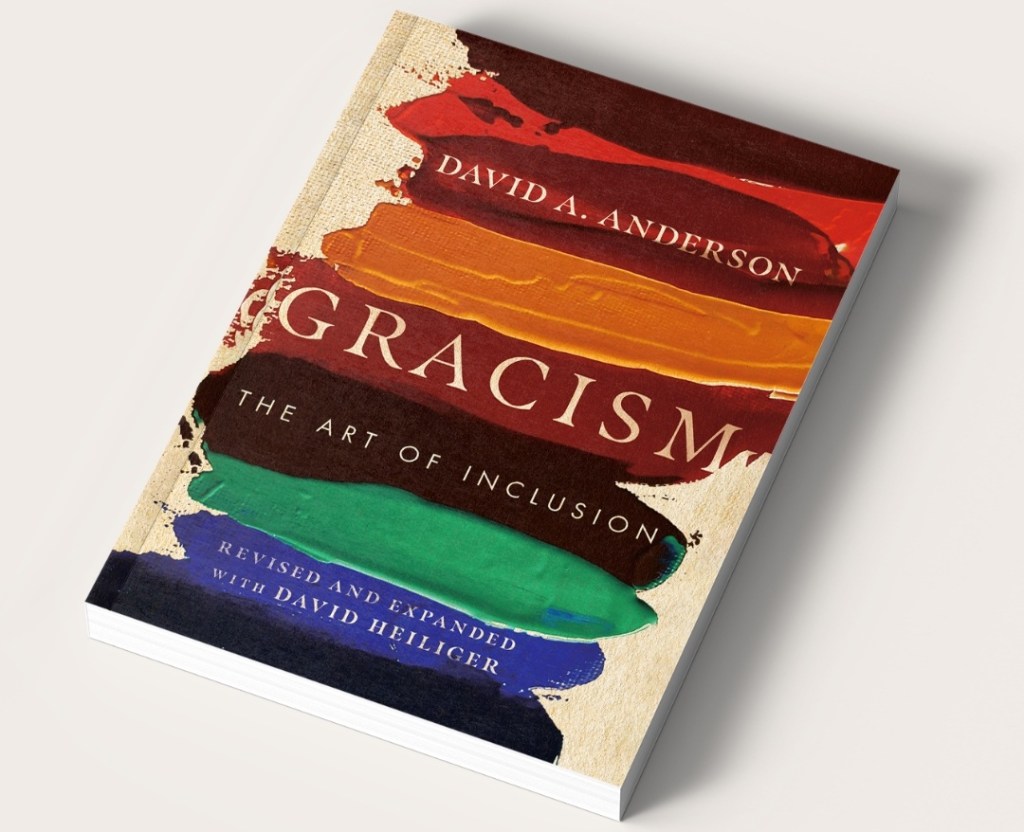
A Gracist is someone who extends grace, intentionally, actively, and personally to people of every color, class, and culture. Not because they ignore differences. Not because they pretend the world is perfectly fair. But because they have been transformed by a God who, in His own grace, pays special attention to the overlooked, the marginalized, the one left out. In the same way, a good coach gives extra time to the player who needs it most; God’s grace is not generic. It is specific, personal, and lavish.
Mister Fred Rogers understood this. When he was once asked what single lesson he would share if given one final broadcast, he said he would want every person watching to know that they had unique value, that there has never been anyone in the whole world exactly like them, and there never will be, and that they are loved by the Person who uniquely created them. As Anderson affirms in Gracism, Rogers was essentially describing the heartbeat of the Gospel: every human being carries irreplaceable, God-given worth.
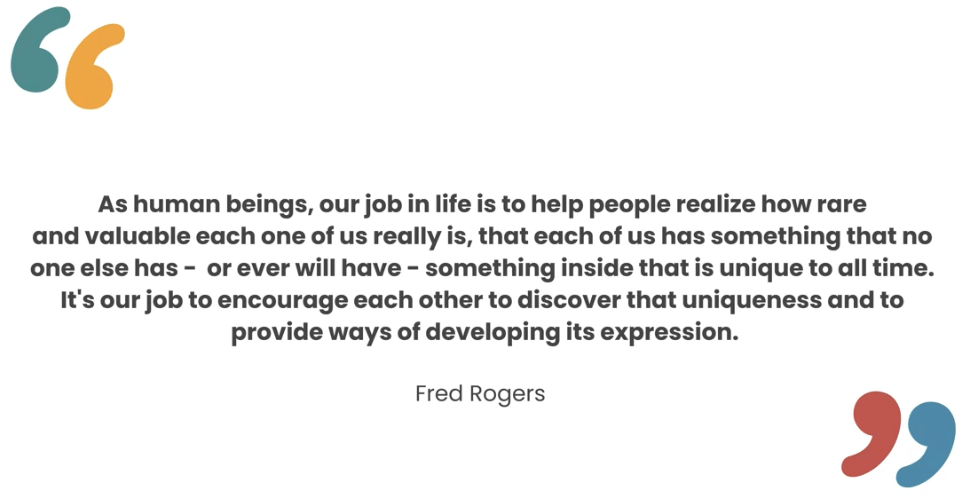
If more Americans could really know that, not as a bumper sticker slogan, but as a soul-deep, life-altering conviction, the racial and ethnic tension that political opportunists thrive on would lose most of its oxygen.
A Gracist doesn’t see a Black neighbor, a white coworker, a brown classmate. A Gracist sees an image-bearer of God, someone endowed by their Creator with dignity that no survey box can contain and no political party can grant or revoke.
The Only Emulsifier That Works
Here is the uncomfortable truth that no policy, diversity program, sensitivity training, or presidential commission will ever fully reckon with: you cannot legislate reconciliation into existence.
The Apostle Paul wrote it plainly in 2 Corinthians 5:18, “All this is from God, who reconciled us to himself through Christ and gave us the ministry of reconciliation.” Note what he said: God gave us the ministry of reconciliation. Not a government program. Not a mandate. A ministry, which means it flows from transformed hearts, not enforced compliance.
A teaching from Dr. Tony Evans on this passage puts it this way: “When the Holy Spirit takes over, Black people can get together with white people, rich people can get together with poor people… because the Holy Spirit is holding you together. That’s why it’s called the unity of the Spirit, because He is the emulsifier.” Think about that word, emulsifier. In chemistry, an emulsifier is what binds together substances that would naturally repel each other. Oil and water don’t mix. Until something intervenes.
Unity, in this framework, is oneness, not sameness. We were never meant to be identical. We were meant to be reconciled. And the only power capable of genuine reconciliation across lines of race, class, culture, and politics is the love of Christ working through Spirit-filled people willing to carry that ministry into every corner of their lives.
As Paul also wrote to the Galatians: “There is neither Jew nor Greek, slave nor free, for you are all one in Christ Jesus” (Galatians 3:28). He wasn’t erasing our differences. He was announcing that in Christ, our differences no longer determine our destiny.
What We Owe the Next Generation
I’m writing this for parents. For grandparents. For anyone who has ever looked at a child sleeping peacefully and felt the full weight of what we are handing down to them.
The American Dream is not a myth. It is a moral inheritance. The conviction, rooted in Scripture and enshrined in our founding documents, that every human being is endowed by their Creator with the dignity and the right to build a life, raise a family, and pursue flourishing. Regardless of where they came from. Regardless of what box they can’t check on a form.
But that Dream requires stewardship. It requires us to refuse the language games that fracture us into competing racial tribes. It requires us to hold our founders accountable while celebrating the redemptive arc of America’s story. It requires us to be honest about injustice without weaponizing that honesty for political power. And above all, it requires us to do what no government can do for us: to reconcile ourselves first to God through Christ, and then carry that reconciliation outward to our neighbors, our communities, and our country.
That is Gracism in action. That is America at her best.
The children watching us right now, our sons and daughters, our grandchildren, are learning from us what it means to be an American. They are learning whether this country is worth loving, worth defending, worth the cost of civic courage.
I believe it is. I believe they are worth it.
Won’t you join me in becoming a Gracist American?
 MindWolves