
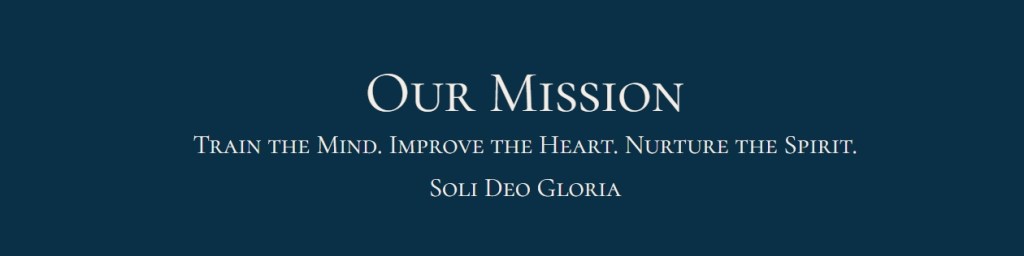
In the quiet sanctuary of my Morning Ritual today, I found myself pondering the beautiful intersection of classical education, neighborly love, and spiritual formation. It was sparked by my podcast interview of Dr. Eric Stennett, Head of School for Penn Woods Classical Academy. The mission of Penn Woods Classical Academy is to train the mind, improve the heart, and nurture the spirit. This touches my heart deeply and reminds me of a conversation I once had with a weathered teacher whose eyes sparkled with forty years of classroom wisdom.
“Education isn’t just about filling minds,” she whispered, her voice carrying the weight of countless young lives touched. “It’s about cultivating souls who recognize their place in God’s grand narrative.”
The Three-Fold Journey of Mind, Heart, and Spirit
The mission to “train the mind, improve the heart, and nurture the spirit” speaks to an education that honors the wholeness of human existence. This three-fold approach mirrors what I’ve witnessed in my own spiritual journey—that transformation happens when all three aspects of our being are aligned toward truth, goodness, and beauty.
My journey started with a firm commitment to training my mind in 2017. I had to unlearn what I had learned. I was inspired by the book The Strangest Secret, written by Earl Nightingale in 1957. In The Strangest Secret, Earl defines success as “the progressive realization of a worthy ideal.” He argued that the ability to incrementally progress towards this goal is a function of what you allow to occupy your mind daily. He compares the human mind to fertile soil. Like soil, your mind does not care what you plant but will return what you plant. If you plant corn, you’ll harvest corn. If you plant nightshade, a toxic perennial herbaceous plant, you’ll get poison. Corn or nightshade? We get to decide.
Moreover, if you are a Christian, you have the Holy Spirit as your Helper. He will show us how to transform our minds, which is why you also have to spend time in God’s Word daily. Anchoring one’s identity in God’s Word is profoundly important to how we see the world. For example, when we learn about the Parable of the Good Samaritan, we’re learning how to see with Christ’s eyes. We are learning what it means to be a neighbor.
Wisdom’s Integration with Neighborliness
Classical education empowers liberation from “ignorance and confusion, from prejudice and delusion.” We can elevate this further by connecting such liberation to becoming “lifelong disciples of Christ.” This liberation echoes the Good Samaritan’s freedom from societal prejudice that allowed him to see the wounded traveler not as a stranger but as a neighbor. Consider how the Samaritan’s education manifested:
- He provided ongoing care (sustained commitment)
- He saw clearly (intellectual virtue)
- He felt compassion (moral virtue)
- He took action (civic virtue)
I’m reminded of a mentor who once shared, “Knowledge tells us what we can do; wisdom shows us what we should do; but Christ’s love compels us toward what we must do.”
The Good Samaritan exemplifies this integration perfectly:
- His mind recognized the wounded traveler’s physical needs
- His heart was moved with compassion beyond cultural boundaries
- His spirit acted in alignment with divine love, regardless of cost
In this way, the Samaritan demonstrated what Christian classical education seeks to cultivate—the pursuit of truth, goodness, and beauty “for the glory of God and the flourishing of human beings and human community.”
Daily Practices for Mind, Heart, and Spirit
The path toward becoming both educated and neighborly requires intentional practices:
- Morning centering in Scripture and prayer, inviting Christ to shape our seeing
- Approaching each subject as a thread in God’s tapestry of truth
- Practicing neighborliness in small, daily interactions
- Reflecting each evening on moments where truth, goodness, and beauty were encountered
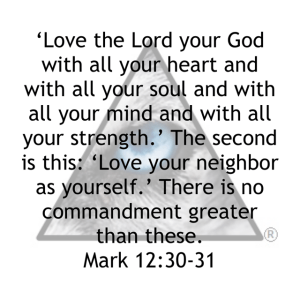
I’ve found in my own journey that these practices gradually transform us into people who, like the Good Samaritan, naturally cross boundaries to offer Christ’s love to wounded neighbors. In other words, we are being obedient to the greatest commandments of first loving God with all our mind, heart, and spirit and then loving our neighbor as ourself.
As I continue to ponder these beautiful intersections, I’m humbled by education’s sacred potential—not merely to inform minds but to form souls who recognize the divine image in every neighbor they encounter. Perhaps this is the glory of God made manifest—in minds that discern truth, hearts that choose goodness, and spirits that create beauty in a world desperately in need of neighborly love.
 MindWolves